 Every project's full RERA record. Verified in seconds.
56% of DTCP-approved projects in our index are regularisation cases. For CMDA it is 22%

"Approved" can mean two very different things. Sometimes it means the plan was sanctioned and then built. Sometimes it means the building came first and the approval was regularised afterwards under a government scheme. The RERA record lets us tell the two apart — the approval documents say so in their own text.
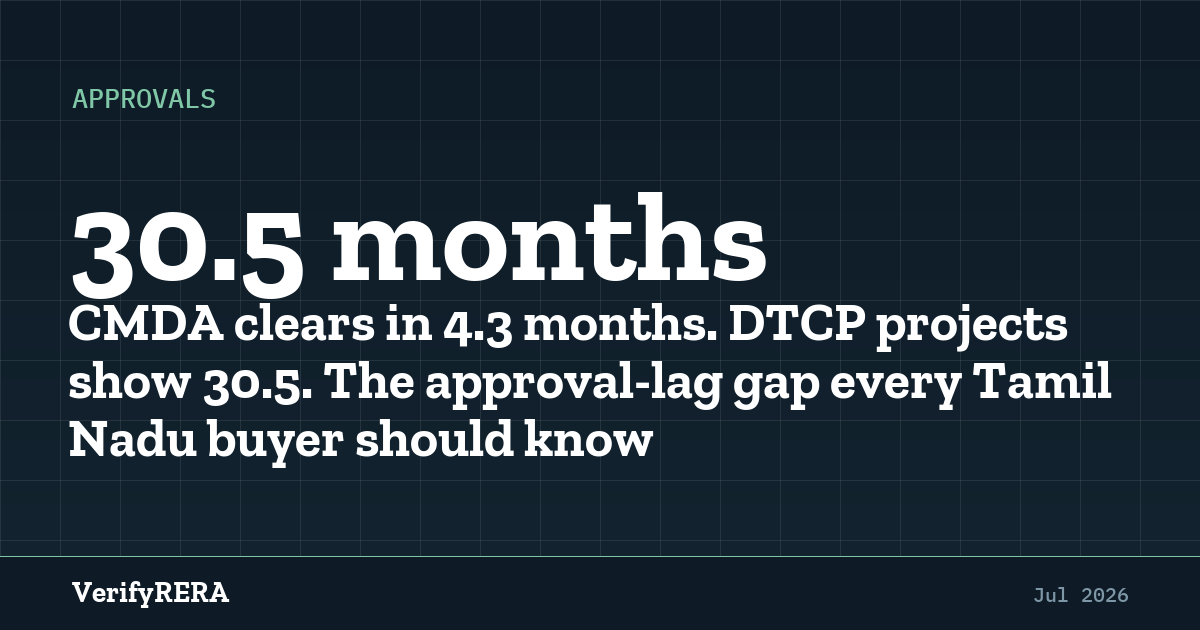
Among projects in our index with a parsed approval document, 56% of DTCP approvals are regularisation cases against 22% for CMDA. The pattern matches how the two authorities work: CMDA governs the metro where enforcement is closer, while district-level construction has historically run ahead of its paperwork and caught up through regularisation windows.
Is a regularised project bad?
Not automatically — a regularisation order is a legal approval. But it tells you the project's compliance culture ran behind its construction at least once, and it makes the rest of the record worth reading carefully: extensions, quarterly filings, completion status. A regularised approval plus a clean delivery record is a different risk than a regularised approval plus missed deadlines — and both configurations are visible on the project page.
Every project page in our index labels a regularisation order when the approval text declares one, with a link to the government PDF it came from.
Method & sources: figures computed from public TNRERA registration records — how we parse and score. Cite freely with a link.